Securing AI-Generated Code: A Guide for Agile Teams
Generative AI has gifted Agile teams with unprecedented velocity. [cite_start]Tools like GitHub Copilot and ChatGPT can draft boilerplate code, optimize algorithms, and write unit tests in seconds[cite: 124].
[cite_start]However, this speed creates a new form of technical debt: security debt[cite: 125]. [cite_start]AI models are trained on billions of lines of public code, including code that is insecure, outdated, or vulnerable[cite: 126]. [cite_start]When developers blindly accept AI suggestions to close a Sprint backlog item, they risk injecting known vulnerabilities directly into the production codebase[cite: 127].
[cite_start]This guide focuses on the security risks of AI-generated code and provides a roadmap for Agile teams to use these tools safely without compromising their security posture[cite: 128].
1. The Risks: Hallucinations and Insecure Patterns
[cite_start]To secure AI-assisted development, you must first understand that Large Language Models (LLMs) do not "know" security; they predict patterns[cite: 131].
-
[cite_start]
- Insecure Defaults: AI often suggests code using older libraries or deprecated functions (e.g., suggesting md5 for hashing instead of bcrypt) because those patterns appear frequently in its training data[cite: 132]. [cite_start]
- Code Hallucinations: AI may invent libraries or API calls that look plausible but do not exist—or worse, point to malicious "typosquatting" packages[cite: 133]. [cite_start]
- Lack of Context: An AI snippet might be secure in isolation but introduce a vulnerability when integrated into your specific application logic[cite: 134].
Agile Action: Treat AI as an untrusted contributor. [cite_start]No code generated by an LLM should bypass the peer review process[cite: 135].
2. How to Scan Copilot Code for Vulnerabilities
Traditional peer review is not enough. [cite_start]You need automated gates[cite: 138]. [cite_start]Here is the workflow for mitigating AI coding risks in a Scrum environment[cite: 139]:
-
[cite_start]
- Isolation: Generate AI code in a sandbox or distinct branch, never directly in the main branch[cite: 140]. [cite_start]
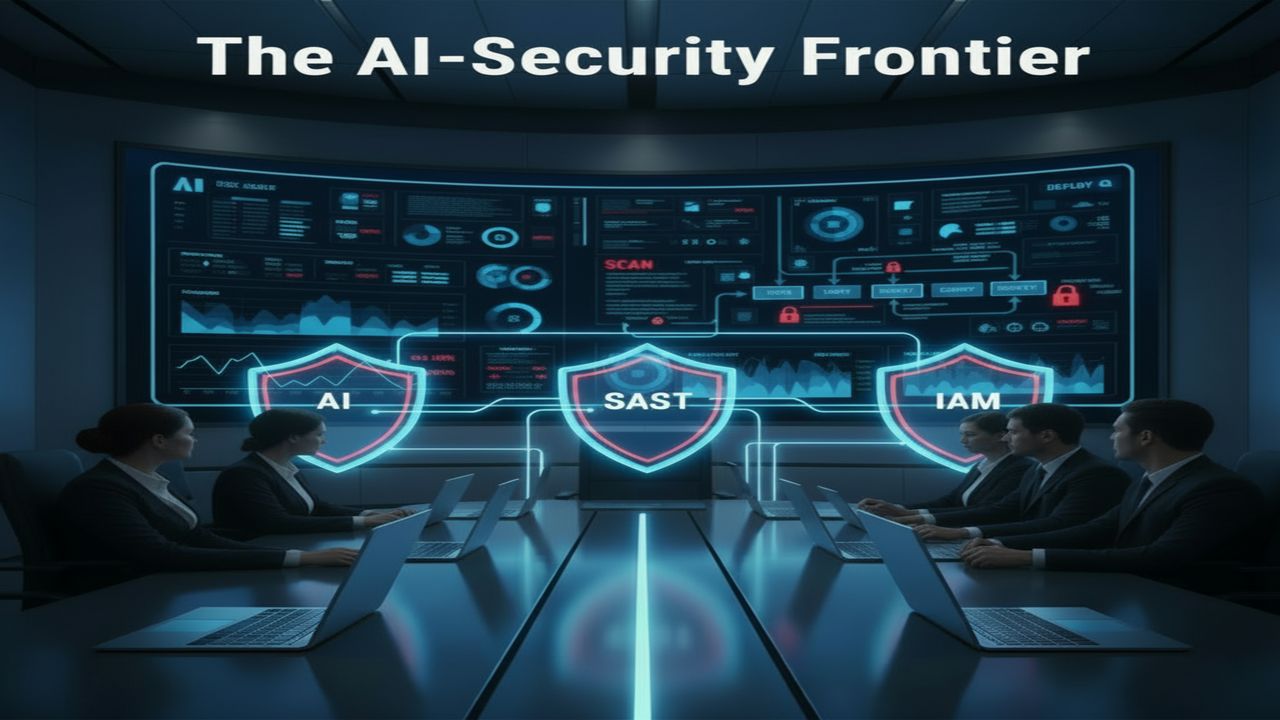
- Static Analysis (SAST): Run SAST tools immediately on the generated block[cite: 141]. [cite_start]Standard linters may miss logic flaws specific to AI (like prompt injection susceptibilities)[cite: 142]. [cite_start]
- Human Verification: A senior developer must review the business logic[cite: 143]. [cite_start]AI is great at syntax, but poor at understanding complex business constraints[cite: 144]. [cite_start]
- Unit Testing: Require that any AI-generated function comes with an AI-generated test case to prove it behaves as expected[cite: 145].
3. Top 5 SAST Tools for AI Code Security
[cite_start]To monetize your traffic effectively and provide value, you must use tools designed for the modern stack[cite: 148]. [cite_start]These platforms are bidding high for traffic related to "AI Shielding"[cite: 149].
-
[cite_start]
- Snyk: Excellent for identifying open-source vulnerabilities in libraries suggested by AI[cite: 150]. [cite_start]
- Veracode: Offers specialized static analysis for machine learning code and automated remediation[cite: 151]. [cite_start]
- GitHub Advanced Security: If you use Copilot, this is the native defense[cite: 152]. [cite_start]It features "Copilot Autofix" to find and fix vulnerabilities in real-time[cite: 153]. [cite_start]
- SonarQube: The industry standard for code quality that now includes rules for detecting insecure AI patterns[cite: 154]. [cite_start]
- Checkmarx: Provides robust scanning for LLM security best practices and supply chain risks[cite: 155].
4. Preventing Prompt Injection in Agile Apps
[cite_start]If your Scrum team is building applications powered by LLMs (e.g., a customer service chatbot), you face a specific threat: Prompt Injection[cite: 158].
[cite_start]Attackers can craft inputs that trick your AI into ignoring its safety guidelines and revealing sensitive backend data[cite: 159]. [cite_start]This is currently the #1 risk on the OWASP Top 10 for Large Language Models[cite: 160].
[cite_start]The Defense Strategy[cite: 161]:
- Input Sanitization: Never trust user input. [cite_start]Strip special characters before feeding them to the LLM[cite: 162].
- Least Privilege: Ensure the AI agent only has read-access to the specific data it needs to answer a query. [cite_start]This aligns with Zero Trust principles for secure access[cite: 163]. [cite_start]
- Sandboxing: Run the LLM in a container isolated from your core database[cite: 164].
5. Updating the Definition of Done (DoD)
Agile is disciplined. [cite_start]To operationalize AI security, you must update your Scrum artifacts[cite: 167], similar to how you handle Automated Compliance.
[cite_start]Revised Definition of Done (DoD) for AI Code[cite: 168]:
-
[cite_start]
- [ ] Code generated by AI has been scanned by a SAST tool[cite: 169]. [cite_start]
- [ ] No secrets (API keys, passwords) were pasted into the AI prompt[cite: 170]. [cite_start]
- [ ] Code includes unit tests covering edge cases[cite: 171]. [cite_start]
- [ ] A human developer has explicitly signed off on the logic[cite: 172].
FAQ: AI Code Security
Q: Is code written by ChatGPT secure?
A: Not by default. [cite_start]ChatGPT optimizes for correctness and helpfulness, not security[cite: 174]. [cite_start]It frequently suggests code that works but contains vulnerabilities like SQL injection or weak encryption[cite: 175].
Q: How do we prevent developers from pasting company secrets into AI?
[cite_start]A: Use GitHub Copilot Enterprise security features or similar enterprise-grade tools that offer privacy guarantees[cite: 177]. [cite_start]Block public AI access on corporate networks and provide a private, sanctioned alternative[cite: 178].
Q: What is the biggest risk of using AI in development?
[cite_start]A: The biggest risk is "blind trust," where developers assume the AI's output is correct and secure, skipping the necessary review and testing phases[cite: 180].
Q: What is SAST?
[cite_start]A: SAST stands for Static Application Security Testing[cite: 181]. [cite_start]These are tools that scan your source code (at rest) to find vulnerabilities before the application is run[cite: 182].
Sources and References
-
[cite_start]
- OWASP – Top 10 for Large Language Models (LLM) [cite: 184] [cite_start]
- GitHub – Copilot Security & Privacy Guide [cite: 185] [cite_start]
- NIST – Artificial Intelligence Risk Management Framework (AI RMF) [cite: 186] [cite_start]
- Snyk – AI Generated Code Security Report [cite: 187] [cite_start]
- Scrum Day India – DevSecOps 2026: The Guide to Secure Agile Delivery (Return to Pillar Page) [cite: 188]