Compliance as Code: Automating Audits in Sprints
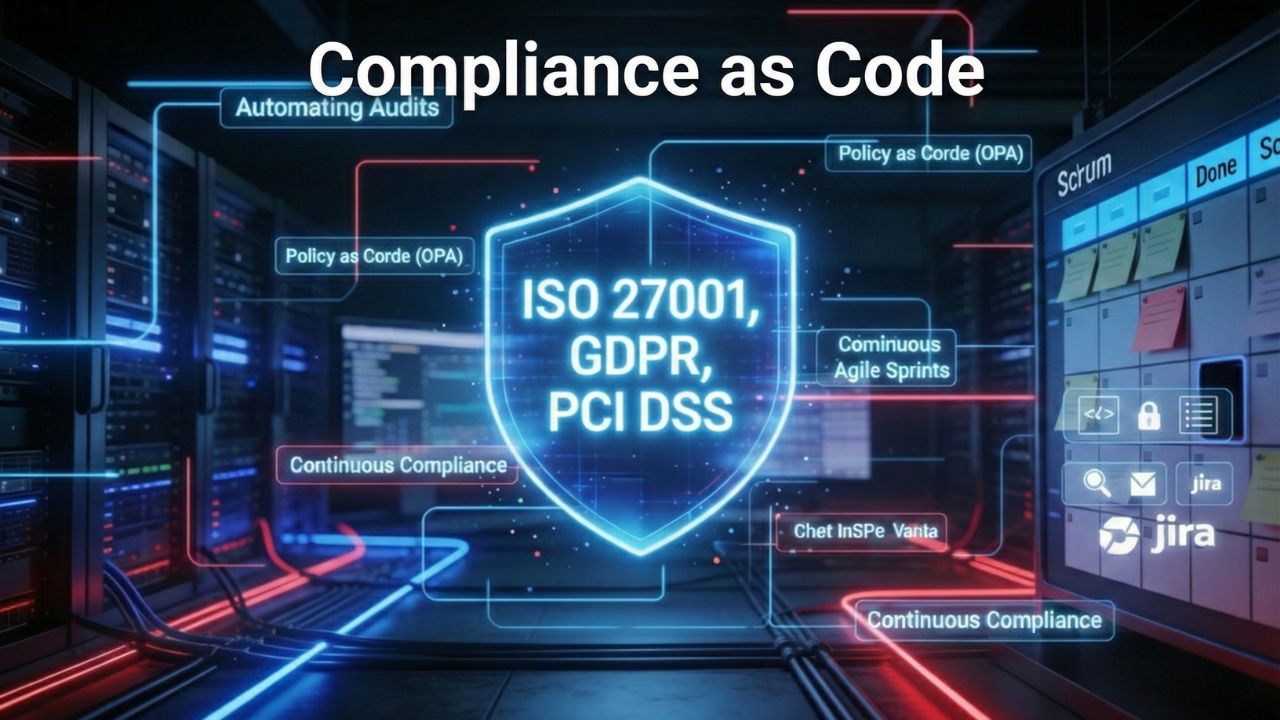
In traditional software development, "compliance" is often the wall that Agile teams hit right before a release. You spend two weeks in a high-velocity Sprint, only to spend two months waiting for a manual audit to verify that your infrastructure meets ISO 27001 or GDPR standards.
In 2026, this bottleneck is being eliminated by Compliance as Code (CaC). By treating regulatory requirements the same way we treat unit tests, Scrum teams can automate audits directly within their CI/CD pipelines, ensuring that every increment is "born compliant."
1. Shifting Governance Left: The End of Manual Audits
Manual auditing is reactive, error-prone, and slow. Compliance as Code (CaC) shifts this process "left" into the development phase. Instead of a 50-page PDF of security requirements, compliance is defined in machine-readable files (like YAML or JSON) that act as automated guardrails.
- Policy as Code (PaC): Using tools like Open Policy Agent (OPA), teams write policies that automatically block non-compliant code. For example, a policy can prevent a developer from deploying a database that isn't encrypted.
- Continuous Compliance Monitoring: Instead of a quarterly report, DevSecOps teams use real-time GRC dashboards to see the compliance status of every microservice instantly.
2. Automating Frameworks: ISO 27001, GDPR, and PCI DSS
Automating complex regulatory frameworks requires mapping specific controls to technical checks.
- Automating ISO 27001 Audits in Agile: Use automated scanning to verify access controls and encryption-at-rest for every build.
- GDPR Compliance Automation for Developers: Implement automated PII (Personally Identifiable Information) detection in databases and logs to ensure "privacy by design."
- Automating PCI DSS Compliance: Ensure that network segmentation and firewall rules are automatically validated during Infrastructure as Code (IaC) security scanning.
3. Compliance as Code for Terraform and IaC
Most compliance failures happen at the infrastructure level. When using Compliance as Code for Terraform, teams can catch misconfigurations before they are provisioned.
DevSecOps Governance Policies Examples:
- "All production storage volumes must be encrypted using AES-256."
- "No security groups shall allow SSH access (Port 22) from the open internet."
- Drift Detection: Automate alerts when a manual change in the cloud console breaks a compliance rule established in the code.
4. Top 5 Automated Compliance & Governance Tools
| Tool | Focus Area | Key Benefit |
|---|---|---|
| Open Policy Agent (OPA) | Policy as Code | A unified framework for policy enforcement across the entire stack. |
| Chef InSpec | Compliance Testing | Turns compliance, security, and policy requirements into executable code. |
| Bridgecrew (Prisma) | IaC Security | Scans Terraform and CloudFormation for compliance violations in real-time. |
| Vanta | ISO 27001 / SOC2 | Automates the evidence collection process for security audits. |
| Drata | Continuous Compliance | Integrates with Jira to automate audit trails for developers. |
5. Bridging the Gap: Audit Trails for Jira and Scrum
For an auditor, "we did it in the Sprint" isn't enough; they need proof. Audit trail automation for Jira ensures that every code change is linked to a specific user story, a successful security scan, and a peer review. This creates an immutable record of compliance, making manual "audit prep" weeks a thing of the past.
FAQ: Compliance as Code & Automated Audits
Does automation replace the auditor? No. It replaces the tedious data-gathering, allowing auditors to focus on high-level risk strategy.
How do we handle "Compliance Bottlenecks" in Agile? By automating the checks. If compliance is checked every time a developer hits "save," there are no surprises at the end.
What is HIPAA compliance in DevOps pipelines? It involves automating the encryption, logging, and access control requirements specifically for healthcare data.
What is a real-time GRC dashboard? A visual interface pulling data from your cloud to show current compliance posture against frameworks like SOC2 or GDPR.