Cognitive Load Theory in Scrum: Preventing Burnout in High-Velocity AI Sprints
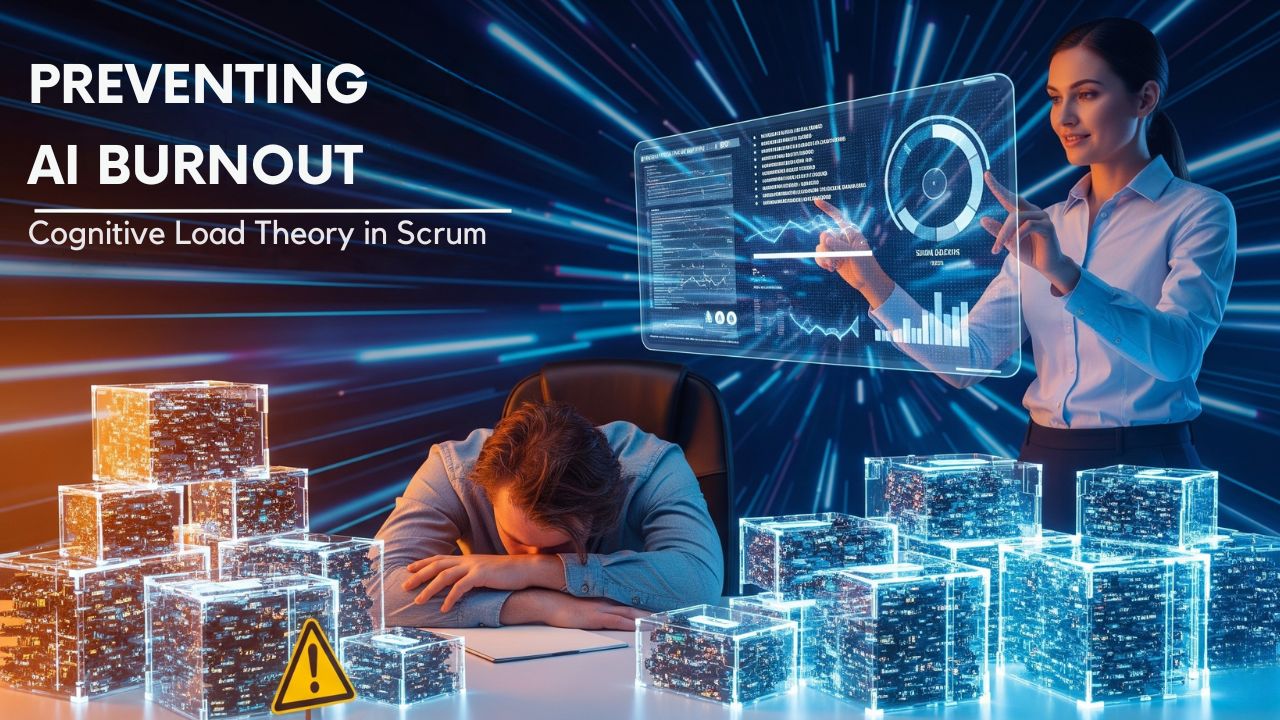
AI doesn't get tired. Humans do. The relentless pace of AI-assisted development can easily drown a human team in a flood of code reviews, alerts, and decisions. This phenomenon is known as "Reviewer's Fatigue," and it is the primary cause of burnout in high-velocity teams.
In the "Cognitive Agile Enterprise" of 2026, the Scrum Master's role evolves into a guardian of mental bandwidth. By applying Cognitive Load Theory—a concept popularized in Team Topologies—we can design Sprints that respect human limits while leveraging AI's speed.
Understanding the Three Types of Cognitive Load
To prevent burnout, we must understand how mental effort is distributed within a hybrid team:
- Intrinsic Load: The inherent difficulty of the problem itself (e.g., complex business logic).
- Extraneous Load: Mental effort wasted on things that don't add value (e.g., bad tooling, poor prompts, or noisy AI alerts).
- Germane Load: The "good" mental effort spent building long-term mental models and architectural vision.
The AI Paradox: High Velocity, High Fatigue
When AI agents generate documentation, code, and test cases in seconds, they significantly reduce the "doing" time. However, they drastically increase the Review Load. A developer who once spent 6 hours writing code now spends 6 hours reviewing 10x the amount of AI-generated code. This leads to decision fatigue and an erosion of the "sustainable pace" promised by Agile.
Strategies for Sustainable AI Sprints
1. Measuring the Reviewer-to-Builder Ratio
The Scrum Master must monitor how much time humans spend "correcting" AI output versus doing original work. If cognitive friction occurs—where reviewing AI work takes more effort than doing it manually—the Scrum Master must intervene to "re-tune" the AI agents or reduce the Sprint velocity.
2. Implementing Team Topologies for AI
Teams should be structured to minimize extraneous load. This might involve creating a "Platform Agent" that handles the noise of infrastructure, allowing the human "Stream-aligned Team" to focus on high-value judgment calls.
3. The "Human-in-the-Loop" Governor
Establish clear thresholds for AI autonomy. Not every piece of code needs to be reviewed immediately. By batching reviews or using "Vibe Checks" for low-risk modules, you can preserve the team's mental energy for critical architectural decisions.
Frequently Asked Questions (FAQ)
What is "Cognitive Load" in the context of Agile?
Cognitive Load refers to the amount of mental effort required to complete a task. In AI-driven sprints, the volume of generated code can overwhelm human reviewers, making management of this load critical to preventing burnout.
How do we maintain a sustainable pace with AI agents?
By establishing "Human-in-the-Loop" governance and monitoring "Reviewer's Fatigue." The Scrum Master must ensure that AI is viewed as a tool to accelerate human potential, not a replacement that creates a race to the bottom in terms of workload.