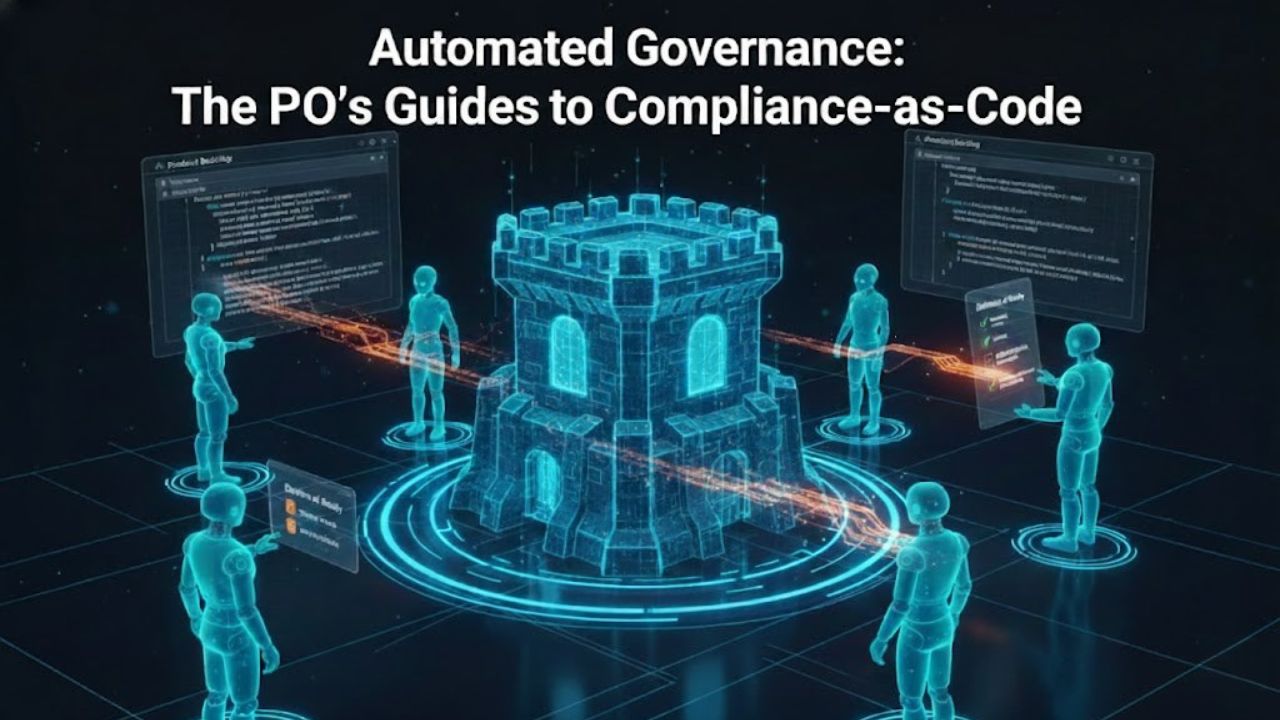
Automated Governance: The PO’s Guide to Compliance-as-Code
In the fast-paced landscape of 2026, compliance is no longer a tax paid at the end of a release cycle. The Agentic Product Owner has shifted from reactive manual checks to Automated Governance, where regulatory requirements are treated as upfront inputs integrated directly into the backlog. This approach, known as Compliance-as-Code, ensures that security and legal standards are met before development even begins.
Moving Security Left: The Agentic Approach
In traditional models, last-minute legal or security blocks often led to Carry Over or delayed releases. By utilizing AI agents, the Product Owner can now clear these hurdles during the refinement process:
- Real-Time Scanning: Security agents scan the product backlog in real-time to identify potential risks.
- Auto-Injection: If a feature captures Personally Identifiable Information (PII), agents immediately flag it and inject specific GDPR or HIPAA requirements into the story.
- Pre-Planning Clearance: Regulatory hurdles are cleared prior to the Sprint Planning event, ensuring the team only works on compliant items.
- Non-Human Identity Management: AI agents assist in managing risks associated with non-human identities and OAuth worms that could derail velocity.
The Impact on the Definition of Ready (DoR) and Done (DoD)
Automated governance fundamentally changes how we define the maturity of a backlog item and the completion of an increment:
| Standard Artifact | Role of Agentic Governance |
|---|---|
| Definition of Ready | A story is only Ready once security agents have validated it against the organization's Compliance-as-Code library. |
| Definition of Done | The DoD now includes automated verification that all Compliance-as-Code checks have passed and documentation is auto-updated. |
| Sprint Backlog | Includes auto-generated stories for secrets rotation, SBOM management, and audit logs. |
FAQ: Automated Governance & Compliance
Q: Does the Product Owner need to be a security expert?
A: No, but the PO must act as an orchestrator. You use security agents to provide the expertise, while you ensure those requirements are prioritized and aligned with the product vision.
Q: How does this prevent Carry Over?
A: By identifying compliance requirements during refinement rather than during the Sprint or after code is written, you eliminate the last-minute legal block that often halts production.
Q: What is Compliance-as-Code?
A: It is the process of translating regulatory and security requirements into programmable scripts that can be automatically checked by AI agents throughout the lifecycle.