The Best Scrum Certification for Beginners
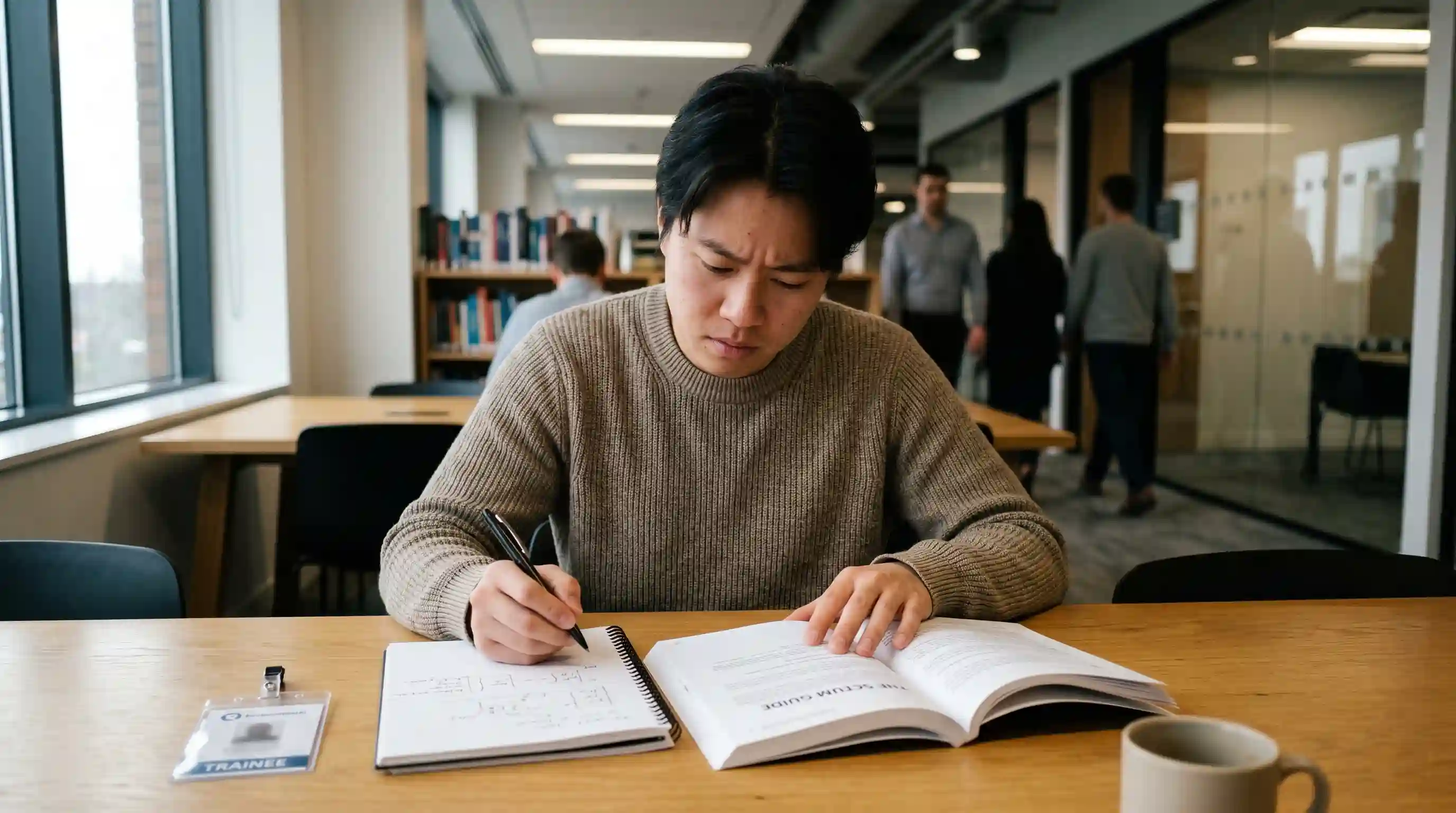
Key Takeaways
- No Experience Needed: The best entry-level certifications (CSM and PSM I) have absolutely no real-world prerequisites.
- The Guided Route: The CSM is widely considered the easiest for absolute beginners because of its mandatory, hands-on coaching.
- The Self-Starter Route: PSM I is preferred by disciplined beginners who want to prove their knowledge affordably through self-study.
- Cost vs. Value: Beginners must weigh the high upfront cost of a classroom against the rigorous failure rate of a cheaper, exam-only credential.
New to Scrum? The best beginner certification depends on one factor most guides ignore: your personal learning style and need for accountability.
As a coach who actively onboards career-changers into their first Scrum roles, I see countless entry-level professionals waste money on credentials that don't match their foundational needs.
Before you commit to a study path, you must understand the broader ecosystem by reviewing our primary Scrum Master Certification Decision Hub to see how these baseline badges align with industry expectations.
Foundational Choices: CSM vs. PSM I
When starting from zero, the market essentially offers you two primary gates into the Agile framework.
Both hold exceptional global recognition, but they treat the beginner journey very differently.
Certified ScrumMaster (CSM): The Classroom Safety Net
The CSM is overwhelmingly recommended for absolute beginners. Because the Scrum Alliance mandates a two-day interactive class led by a certified trainer, you are not left alone to decipher the complex terminology.
This hands-on coaching ensures you understand the core mechanics of servant leadership before you ever take the test.
Furthermore, the exam is an open-book, untimed assessment with a remarkably high pass rate, drastically reducing beginner test anxiety.
Professional Scrum Master (PSM I): The Self-Taught Challenger
If you are a self-starter operating on a tight budget, the PSM I from Scrum.org is your target.
It requires absolutely no mandatory classes.
However, do not mistake its lack of prerequisites for ease.
It demands a rigorous 85% passing score within a 60-minute time limit.
Beginners must engage in intense self-study to internalize the Scrum Guide without the safety net of an instructor.
Do Beginners Need Mandatory Training?
The biggest decision a beginner faces is whether to pay for a structured course or attempt to study independently.
Structured learning accelerates comprehension. If you have zero background in software development or agile delivery, reading a manual is rarely enough to grasp situational leadership.
A live trainer answers your questions in real-time, untangles complex concepts, and shares practical anecdotes that books cannot provide.
Conversely, if you possess strong reading comprehension and self-discipline, you can bypass the classroom entirely.
Just be aware that failing a cheaper exam multiple times can quickly offset the initial savings.
To understand the true financial breakdown, review our detailed Scrum Master certification cost comparison.
Accelerating the Entry-Level Job Search
Earning your first certification is the quickest way to signal trust to an employer.
Most applicant tracking systems (ATS) automatically filter out resumes that lack foundational credentials like the PSM or CSM.
However, a badge alone won't land the job. A beginner must leverage their certification to network effectively.
Use the vocabulary you learned during your training to rewrite your legacy resume, mapping your past traditional project experience into Agile terminology.
Conclusion & CTA
Securing your first agile credential is a powerful step toward a new career trajectory.
Whether you choose the guided coaching of the CSM or the strict self-study rigor of the PSM I, gaining that foundational baseline is critical.
Ready to transition into the agile industry with confidence? Stop guessing and start studying by enrolling in our comprehensive general agile certification courses today.

Frequently Asked Questions (FAQ)
Which Scrum cert should a beginner start with?
Beginners should start with either the CSM for guided, hands-on learning or the PSM I for a cost-effective, self-paced challenge. Both are universally recognized foundational credentials.
Can I get certified with no experience?
Yes. Both the CSM and PSM I have zero prerequisite requirements for professional experience, making them perfect for career changers entering the agile field.
Is CSM good for beginners?
CSM is widely considered excellent for beginners. The mandatory two-day interactive class immerses newcomers in the framework, and the open-book exam ensures a high success rate.
Is PSM too hard for beginners?
It is difficult, but not impossible. Beginners can absolutely pass the PSM I, but it requires rigorous self-study, deep memorization of the Scrum Guide, and extensive practice tests to meet the strict 85% passing score.
Do beginners need a training course?
It depends on the certification. CSM mandates a two-day training course, whereas PSM I does not require any formal training to sit for the exam.
What is the cheapest beginner Scrum cert?
The PSM I is the cheapest foundational option. It costs a flat $200 for the exam attempt with zero mandatory training and no lifetime renewal fees.
Which certification helps land entry-level jobs?
Both the CSM and PSM I act as crucial baseline trust signals for recruiters. They help your resume pass through automated Applicant Tracking Systems (ATS) for entry-level agile roles.
Which beginner cert has lifetime validity?
The Professional Scrum Master (PSM I) from Scrum.org offers lifetime validity. Once you pass, you never have to pay a renewal fee or log education units.
How long does it take a beginner to get certified?
The CSM takes exactly two days of classroom training followed immediately by a short exam. The PSM I typically requires two to three weeks of dedicated self-study for a beginner.
Online or classroom for a first certification?
This depends entirely on your learning style. Interactive, live online or in-person classrooms (like CSM) offer accountability, while self-paced online reading (like PSM) offers budget flexibility.